
Know Your Intersection

Soon after being hired post-graduation, an ops manager pulls me in and says, “look, I can hire two guys to dig a ditch, 6 x 3 x 2. They got six hours.—$ 100 at the end. The first guy hires someone else for $20 to dig in 30 minutes. The second is drenched, getting there, but could use another hour. Who’s my best worker?”
Everyone has heard “to work smarter, not harder” in as many fashions as you can muster. Some of us get the story version. It’s good advice but it hangs up there with other aphorisms that stop dead at any detail and deliver equally negligible results. I hope to offer at least a step after that, built from my experience.
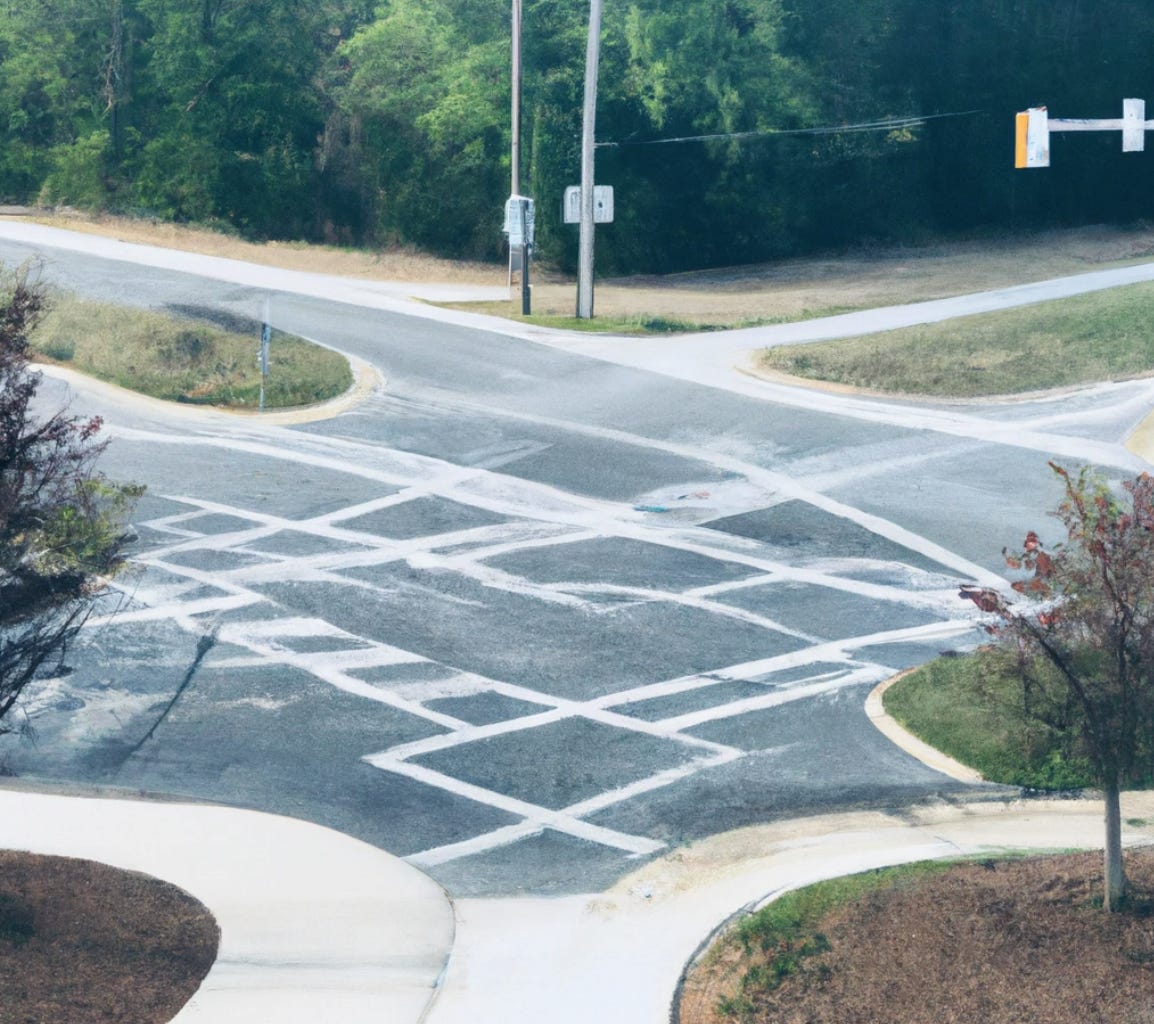
There are so many ways you can teach someone how to call a stranger about their need you can fill. Time and experience often do the best job anyway, but this isn’t about proficiency. The idea is that you map out the departments, vendors, co-workers, or other units attached directly, in progression with, or close orbit that help your job function, and make a YOU ARE HERE. Then ignore it.
That’s your spot, everything related to your role. Your opportunity is to understand how you fit with the rest of the rhizome - to know your intersection. This applies across hierarchies and professions. When I worked front at a fast food restaurant, I had to keep the lobby, bathrooms, and outside clean along with normal counter duty. I learned the drive-thru window and the grille, although I never really worked them. I washed dishes in the back. I prepared salads. I asked to help refill a weekly order.
You could call it too ambitious for minimum wage, but folks often miss how often they make themselves cogs. I learned business and franchising and provided help to my team between rushes or staffing problems. I’ve arrived at pricing systems, API protocols, and program management today, having begun asking, “what are the miles?” any time a spot price was requested across the room fifteen years ago. I was in procurement then. That wasn’t my job. I booked trucks.
Understanding the language of teams around you, how they intersect with yours, and working with them all to contribute to collective problem-solving ensures more meaningful work. It’s also an investment in yourself. To learn new skills and systems that only broaden your understanding of the map around you.
There are fine enough roads that lead to craftsmanship or end-curve designations worthy of their salt. Scale necessitates community building, though. The better you understand where you sit in the town and the intersections within, your ability to problem-solve compounds.